Fire-Rated Garage Doors and Wildfire Prep for Colorado Homes

Key Takeaways
1. Wind-blown embers, not a wall of flame, cause most home ignitions in Colorado wildfires, and the garage is a common way in.
2. A “fire rating” measures how a door holds back an indoor fire, so for wildfire, the bigger levers are noncombustible material, tight seals, and a battery backup opener.
3. Front Range Raynor installs insulated steel doors, replaces worn seals, and sets up battery-backup openers so your garage is ready before fire season starts.
Why Does Wildfire Season Put Your Garage Door to the Test?
Your garage door is usually the largest opening in your house, which makes it a weak point when embers are flying. Embers slip through gaps around and under the door. Then they land on stored paper, cardboard, or fuel and start a fire from the inside out.
A wildfire threatens a home in three ways: flying embers, radiant heat, and direct flame. Of those, embers do the most damage, and they can travel more than a mile ahead of the fire itself.
Anne Cope, PhD, chief engineer at the Insurance Institute for Business & Home Safety, led a team that studied the Marshall Fire. Her team found that up to 90 percent of home ignitions in urban and suburban fires start from embers. A single weak spot is all it takes, she explained, and then “that fire is going to find its way in.”
That is why homes burn while nearby grass and trees survive. The fire hunts for weak points, and an unsealed garage is an easy one.
What Is a Fire-Rated Garage Door?
A fire-rated garage door is a tested assembly designed to resist fire and smoke for a set period. That protection is worth understanding, because a garage is a common place for a house fire to start.
Federal fire data show that fires that begin in a garage tend to grow larger and spread farther than those that start elsewhere in a home.
That is exactly why most homes already have a fire-rated door and do not know it. Building code requires the walk-through door between an attached garage and your living space to be solid-core or 20-minute fire-rated.
It slows a car or garage fire from reaching the house and buys people time to get out.
Do Fire-Rated Garage Doors Have Levels, and Which Fire Rating Do You Need?
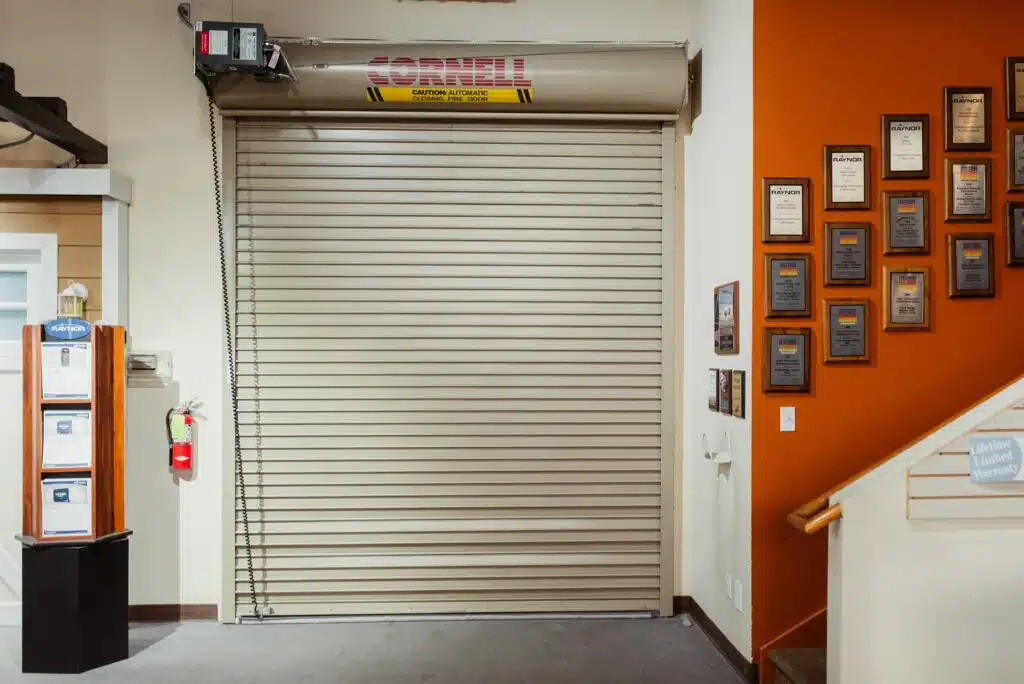
Yes. Fire doors carry a time rating, usually 20, 45, 60, 90, or 180 minutes. The number is how long the assembly held back fire in a lab test under standards like NFPA 252 and UL 10C, where the door, frame, and hardware all have to pass as one unit.
For a home, the level that matters is the 20-minute door required between an attached garage and your living space. Higher ratings like 90 or 180 minutes are built for commercial fire walls, not houses, which is why you rarely see them on a residential garage.
One thing to keep in mind: These ratings measure how a door resists a fire pushing on it from inside a building. Wildfire comes at your home from the outside, as embers and radiant heat. For the big overhead door, the material and the seal do more of the work than the rating number does.
What Should You Know About Fire-Rated Garage Doors With Windows?
Windows are the weakest part of any garage door in a wildfire. Glass can heat up and crack from radiant heat long before flames ever reach your home. Once a pane breaks, embers pour straight into the garage.
Single-pane glass and large windows fail fastest. If you want the look of windows, the safer choice is dual-pane glass, and tempered glass is better still, since it resists heat and breakage far better than standard glass.
We offer steel doors with insulated, dual-pane window options in a range of glass styles. If your home sits in a wildfire zone, ask us about tempered glazing, which some local codes call for.
Not sure you want glass at all? Our guide to garage door windows breaks down the tradeoffs. In wildfire areas, fewer and smaller windows on the fire-facing side is the safer call.
How Do You Seal the Gaps That Let Embers and Smoke In?
Sealing gaps is the cheapest, highest-impact thing you can do to protect a garage from embers. A 2025 study in Nature Communications modeled five major wildfires and found that hardening a home and clearing the first five feet around it could cut structure losses by up to about half.
Sealing your garage is one part of that hardening. It closes off a path that embers use to get inside. Here is where they get in, and how to close each one:
- The bottom of the door. A cracked or flattened bottom seal leaves a gap along the whole floor. A fresh bottom seal blocks it.
- The sides and top. Worn side and top weatherstripping lets embers slip past the edges. New weatherstripping seals the perimeter.
- The framing. Small cracks around the frame are easy to caulk and easy to forget.
- The side entry door. The walk-through door into the garage needs tight seals too, not just the main door.
Old weatherstripping goes brittle and stops sealing. We can replace worn seals and hardware so the door closes tight again. While you are at it, move gas cans, paint, and cardboard away from the door and keep the space tidy.
What Happens to Garage Door Openers During a Power Outage or Evacuation?
An automatic opener stops working the moment the power goes out, and wildfires often cut power. During the Marshall Fire, more than 34,000 Xcel customers lost power as the flames moved in.
Picture the worst version of that. You need to evacuate, your car is in the garage, and the door will not open.
A battery-backup opener keeps the door working when the grid is down. Fire agencies specifically recommend battery backups in wildfire-prone areas for this reason. You should also know how to pull the manual release cord and open the door by hand. Practice it once before you need it.
If your opener is older or has no backup, we can install a battery backup opener and test the manual release with you.
Standard Garage Setup vs. Wildfire-Ready Setup
The gap between a typical garage and a fire-ready one comes down to a handful of details. Here is how they compare.
| Feature | Standard Setup | Wildfire-Ready Setup |
|---|---|---|
| Door material | Wood or hollow-core | Insulated steel, noncombustible |
| Bottom and side seals | Worn or missing | Fresh, tight weatherstripping |
| Windows, if any | Single-pane | Tempered, dual-pane |
| Opener | No backup power | Battery backup, tested manual release |
| Framing gaps | Unsealed | Caulked and sealed |
| Stored contents | Clutter and fuel near the door | Flammables stored away, space kept tidy |
None of these requires a remodel. They are small jobs that add up, and we can handle them in one service visit.
What Should Be on Your Garage Prep Checklist Before Wildfire Season?
Run through this checklist before fire season, not during it. Each item closes a common ember path or keeps your door working when you need it.
- Inspect the bottom seal and replace it if it is cracked, flattened, or gapped.
- Check the side and top weatherstripping and swap out anything brittle.
- Caulk small cracks in the door framing.
- Confirm the door itself is steel or another noncombustible material.
- Seal the walk-through side door the same way you seal the main door.
- Test the battery backup on your opener, and practice the manual release.
- Clear the garage of loose paper, cardboard, and stored fuel near the door.
- Keep your house number visible from the street so responders can find you.
If you would rather not crawl around checking seals, we can inspect and service the whole door in one visit.
Should You Upgrade or Repair Your Existing Garage Door?
Repair is often enough if your door is already noncombustible and structurally sound. A steel door in good shape usually just needs fresh seals and a battery-backup opener to be wildfire-ready. That is a service call, not a replacement.
Replacement makes more sense in a few cases:
- The door is wood or hollow-core and sits in a high-risk area.
- The panels are damaged, warped, or rusted through.
- The door is old, poorly insulated, and impossible to seal well.
When replacement is the right move, an insulated steel door gives you a noncombustible surface and a tighter seal at once. Our residential installation team can walk you through the options, or tell you if a repair would do instead.
Get Your Garage Wildfire-Ready With Front Range Raynor
We have served Fort Collins and Northern Colorado since 1987, so wildfire season is not abstract to us. We know the risk our neighbors face, and we would rather help you prepare than sell you something you do not need.
We look at your actual door, tell you honestly whether it needs seals, an opener upgrade, or a full replacement, and quote a price with no surprises. You can also see and operate insulated steel doors at our Fort Collins showroom before deciding.
What Should You Do Next?
If wildfire season has you looking at your garage differently, here are three steps to take now:
- Check your seals and your opener today. Look at the bottom seal, the side weatherstripping, and whether your opener has a battery backup. Those three things tell you most of what you need to know.
- Fix the weak points before fire season, not during it. Ember sealing and a backup opener matter most when you have the least time to deal with them.
- Get a straight assessment. Call Front Range Raynor at 970-223-9555 or request a free quote, and we will tell you exactly what your garage needs. Our showroom is at 3847 S Mason St in Fort Collins.