Your Garage Door Warranty Might Not Cover What You Think
Key Takeaways
1. Most garage door warranties cover parts and not labor, so a free replacement spring still arrives with a service bill.
2. Your door and opener carry separate warranties from separate manufacturers, and neither covers the other’s parts.
3. Front Range Raynor is factory-authorized for Raynor, Clopay, Amarr, CHI, DoorLink, and LiftMaster, so one technician can handle a door claim and an opener claim on the same visit.
What Does a Garage Door Warranty Actually Cover?
A garage door warranty covers defects in materials and workmanship in the parts the manufacturer built. Coverage is written component by component rather than across the door as a whole, which is why two neighbors with the same door can end up with different protection.
We install Raynor doors daily, and their residential limited warranty is a useful reference point, since the structure is typical industry-wide.
| Component | Typical Single-Family Coverage | What Triggers It |
|---|---|---|
| Steel door sections | As long as the original purchaser owns the home | Rust-through, delamination, defects |
| Window components | About three years | Material or workmanship defects |
| Powder-coated hardware and springs | Sometimes lifetime of ownership | Material or workmanship defects |
| Galvanized hardware and springs | Six years hardware, three years springs | Material or workmanship defects |
| Factory paint system | About five years | Chipping, cracking, loss of adhesion |
| Labor | Not covered | Always a homeowner cost |
Two details catch our customers off guard. Rental and condominium-owned properties usually drop to a flat three-year term, and hardware finish decides whether your springs last three years or decades on paper.
What Warranty Rules Apply to Garage Doors in Fort Collins?
Colorado adds protections on top of whatever your door manufacturer wrote. Three matter most when a claim gets denied.
- Implied warranties survive. A manufacturer issuing a written warranty on your door cannot disclaim implied warranties outright under federal law, though a limited warranty may cap how long they last.
- Colorado sets its own clock. Most states apply the four-year deadline in the Uniform Commercial Code, but Colorado is an exception. C.R.S. 4-2-725 routes claims to the state’s general three-year contract period, and that period cannot be varied by agreement.
- Tie-in provisions are restricted. The FTC generally bars a manufacturer from voiding your door warranty because a non-branded spring or opener part was fitted, unless it supplies that part free.
Locally, the City of Fort Collins requires contractors to hold a city license for the work they perform, verified before a permit is issued. Hiring an unlicensed installer can sink a later claim, since every major door manufacturer excludes damage from improper installation. None of this is legal advice, and a real dispute is worth a call to a Colorado attorney.
Why Does a Garage Door Warranty Not Cover Labor?
Manufacturers warrant the part, and the dealer who removes and installs it charges for the visit. Raynor states that labor charges for installation or repairs are the consumer’s responsibility and must be performed by an authorized dealer.
Chamberlain, which builds both LiftMaster and Chamberlain openers, takes the same position, confirming that service falls outside the warranty and the owner pays any service charges.
In practice, a covered failure means the part arrives free and you still pay us for the diagnosis, the trip, and the labor.
Does the Door Warranty Cover Your Garage Door Opener?
No, the door and the opener are separate products, and each manufacturer draws a firm line around its own equipment. LiftMaster’s limited warranty explicitly excludes any problem with or relating to the garage door and its hardware, including springs, rollers, door alignment, and hinges.
The exclusion runs both directions. A door manufacturer will not pay for a burned-out logic board, and an opener manufacturer will not pay for a cracked panel.
When you shop for a LiftMaster or Chamberlain garage door opener, ask us to show the motor term and the parts term separately, since those numbers often differ sharply on the same unit.
Door Warranty vs. Opener Warranty vs. Home Warranty
Four separate warranties can apply to one garage door, and the gaps between them are where we see claims fail. Here is how they compare.
| Coverage Type | Who Provides It | What It Generally Covers | What It Generally Excludes |
|---|---|---|---|
| Door manufacturer | Raynor, Clopay, Amarr | Sections, hardware, springs, finish | Labor, wear, weather and impact damage |
| Opener manufacturer | LiftMaster, Chamberlain | Motor, drive, logic board, sensors | The door and its hardware, labor, batteries, bulbs |
| Installer labor warranty | Your local dealer | Workmanship on the installation | Component defects, unrelated failures |
| Home warranty contract | A third-party company | Only what the contract names | Anything unlisted, plus a service fee |
What Does a Lifetime Garage Door Warranty Really Mean?
In almost every case, it means as long as the original purchaser owns the home, not as long as the door exists. The Federal Trade Commission’s guide to federal warranty law flags this exact ambiguity and advises companies to state whose life measures the coverage.
Three consequences follow. Coverage usually ends when you sell the house; it applies only to the original residence, and it often depends on registering the product.
The FTC also treats “full” and “limited” as legal designations, not marketing adjectives. A warranty that requires registration, charges for labor, or caps implied warranties is limited by definition, which covers nearly every garage door sold.
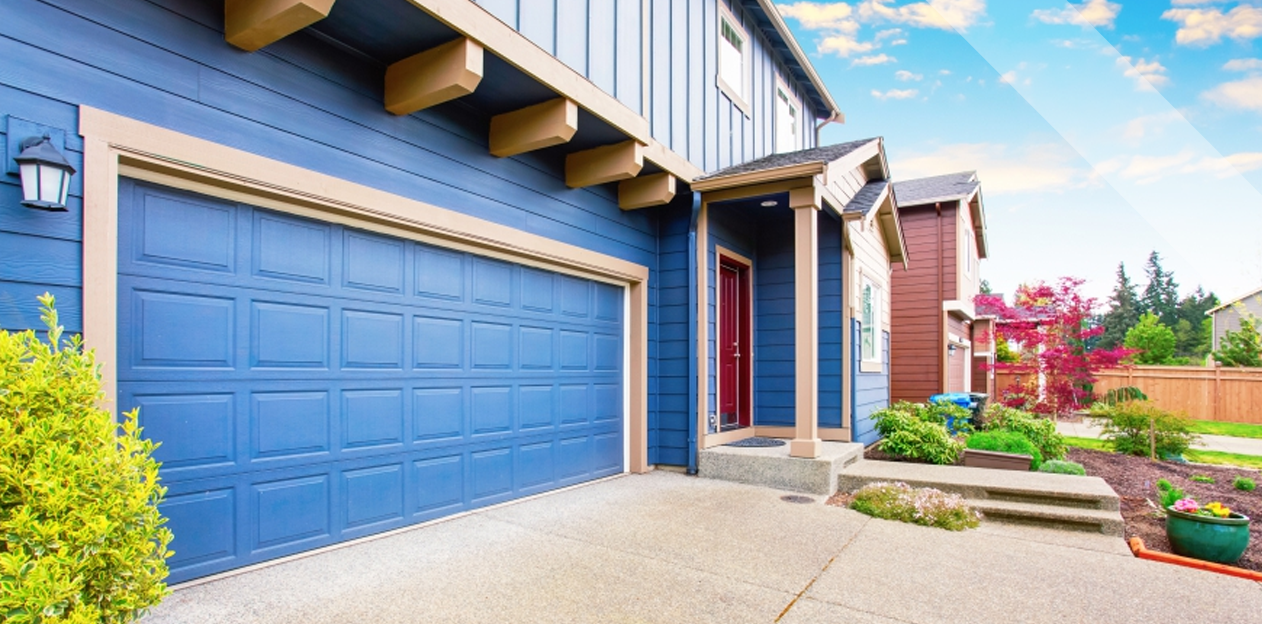
How to Choose the Best Garage Door Replacement Company
What Voids a Garage Door Warranty?
Skipped maintenance, unauthorized repairs, and non-approved parts are the three reasons claims most often get denied. Manufacturers write these exclusions plainly, and they enforce them.
- Missed registration. Many warranties take effect only once the product is registered, and that window is short.
- Neglected maintenance. Failing to follow the cleaning and lubrication schedule voids coverage outright on many residential doors.
- Unauthorized repairs or alterations. Modifying the system or fitting unapproved parts shifts responsibility to you.
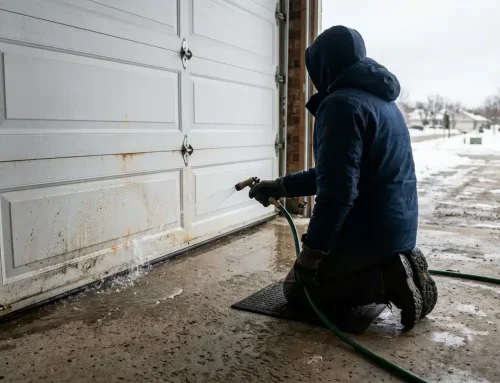
- Pressure washing. It appears by name in the exclusions on steel doors, alongside dents and scratches.
- Field-applied paint. Repainting a powder-coated or specialty-finish door ends the finish warranty.
- Commercial use of a residential door. Running a business from the garage can push the door outside residential coverage.
- Purchases from unauthorized sellers. Chamberlain limits coverage to units bought from authorized resellers.
Northern Colorado adds one more. Raynor’s care schedule calls for washing road salt and de-icer off both faces of the door, and we see the result every spring. Rust from a skipped wash is neglect, not a defect.
The line between your job and ours is clear. Pat Hunter, chair of the DASMA Commercial and Residential Garage Door Technical Committee, puts cleaning and inspection on the homeowner, but “tackling repairs is best left to those who do it daily.” The DASMA maintenance guide shows which tasks fall where.
We handle the half that needs a technician. Put your door on a maintenance and inspection schedule and you get the work plus the dated service record manufacturers ask for when a claim is questioned.
Does a Home Warranty Cover Garage Doors?
Sometimes, and only when the contract names the component. A home warranty is a service contract you buy separately, not a manufacturer’s warranty that ships with the product, and the FTC treats the two as legally distinct.
Colorado law defines a home warranty service contract around structural components, utility systems, and appliances such as stoves and dishwashers. A garage door sits in none of those buckets cleanly, and an opener qualifies only if the plan names it. Read the schedule before assuming a claim will be paid, and expect a service fee.
How Do You File a Garage Door Warranty Claim?
Start with the dealer who sold you the door, since most manufacturers route claims through the seller rather than taking them directly. If that were us, we could pull your file.
- Find your paperwork. You need proof of purchase, the model, and the sales order or serial number.
- Photograph the failure. Manufacturers usually want dated images before they authorize anything.
- Confirm registration. If the product was never registered, deal with that first, since it can decide the claim.
- Call the dealer, not a handyman. An unauthorized repair attempt can void coverage that would otherwise have paid out.
- Ask what labor will cost. Get the number in writing before the visit so the invoice holds no surprises.
Treat this as a general outline, not a fixed procedure, since steps and turnaround vary by manufacturer and by the company that sold the door. We handle the manufacturer paperwork on doors we install, which usually means one phone call instead of three.
Get Straight Answers on Your Warranty From Front Range Raynor
We have served Fort Collins, Loveland, Greeley, and Windsor since 1987, and warranty paperwork is one of the most common things homeowners bring us. Coverage only helps if someone local can act on it.
Because we are a factory-authorized dealer for Raynor, Clopay, Amarr, CHI, DoorLink, and LiftMaster, one technician can process a door claim and an opener claim on the same visit. That removes the usual headache of two manufacturers pointing at each other while your car sits stuck inside.
We also state our own terms plainly. We back our labor with a 90-day warranty, and product warranties vary by type and manufacturer, so you know which promise came from whom. Quoted pricing includes removal, installation, and sales tax.
Every one of our installers and technicians completes an in-house training program before touching a customer’s door, which is exactly what manufacturers ask for when they require authorized-dealer labor. Still choosing a company? Our guide on what to look for in a garage door contractor covers the questions worth asking.
What Should You Do Next?
If you are not sure what your warranty covers, here are three steps to take now:
- Pull your installation paperwork this week. Confirm the product was registered, note the separate terms for door and opener, and find the last service date.
- Book a tune-up if any of that comes back blank. Documented maintenance is the cheapest way to protect coverage you already paid for.
- Get a straight assessment. Call us at 970-223-9555 or request a free quote, and we will tell you what your door actually needs. Our showroom is at 3847 S Mason St in Fort Collins.