How to Effectively Prepare Your Garage for Winter
Key Takeaways
- Front Range winters swing hard between freezes and Chinook warm-ups, so garage winter preparation has to plan for both.
- The heaviest snow here usually falls in March, not January, so winter garage maintenance shouldn’t stop at New Year’s.
- Front Range Raynor’s Fort Collins team handles the parts and repairs for winterizing your garage door, like spring tension and opener settings.
What Temperature Should Your Garage Be in Winter?
There’s no single “right” garage temperature for winter. It depends on how you use the space.
As a baseline, most homeowners aim to keep the garage above freezing to protect pipes and stored items. From there, adjust based on:
- How much time you spend in the garage
- What you use it for, whether that’s parking, storage, or a workshop
- What you’re willing to spend on heating it
On the Front Range, there’s a wrinkle most winter garage guides skip. A Chinook wind can push the outside temperature up 40 to 60 degrees in a matter of hours, then drop it right back down.
A garage that’s comfortably above freezing Tuesday afternoon can be back below freezing by Tuesday night. Planning for that swing, not just a single target number, is part of garage winter preparation here.
Prepare Your Garage for Winter, Step by Step
1. Insulate Your Garage for Winter
Proper garage door winter insulation keeps temperatures more stable and cuts energy loss. Seal gaps and cracks around the garage door and walls with caulk or weatherstripping to keep cold air out and warm air in.
An insulated garage door, or an insulation kit added to your existing door, makes a real difference here, especially through repeated freeze-thaw swings. Front Range Raynor’s Fort Collins showroom carries insulated door options built for exactly this kind of climate, if your current door is due for an upgrade. We also offer parts and installation services to help insulate your garage.
If your garage has attic access, make sure it’s insulated too. That’s an easy spot to lose heat without noticing.
2. Maintain Heat in Your Garage in Winter
Heating the garage protects pipes and extends the life of your garage door opener. It also makes the space usable for hobbies or projects through the winter.
A few common options:
- Space heaters: Portable and convenient for a specific area, but only when used safely and per manufacturer instructions.
- Garage heaters: Dedicated units built to heat the entire space evenly.
- Connecting to your main heating system: An option if your garage is attached to the house and the ductwork allows it.
3. Ventilate Your Garage
Moisture builds up fast in a winter garage, whether it’s from melting snow, humidity, or a car that just came in off wet roads. Without ventilation, that moisture leads to mold and mildew.
Cracking a window or running a fan periodically keeps air moving. It’s a small habit that prevents a bigger problem later.
Winter Garage Door Maintenance Tips to Prevent Freeze Damage
Your garage door is one of the biggest points of heat loss and moisture entry in the whole space. It’s also the part most exposed to the freeze-thaw cycle that defines a Front Range winter.
Check and Replace Garage Door Weatherstripping
Garage door weatherstripping is your first line of defense against drafts and moisture. Inspect it before winter starts, then check it again partway through the season.
Repeated freezing and thawing wears weatherstripping down faster here than in a climate that just stays cold. Replace anything that’s cracked, flattened, or pulling away from the door.
Garage Door Opener Maintenance for Cold Weather
Regular lubrication and a hardware check keep the opener working through the season. Use a silicone-based lubricant rather than standard grease if you can, since grease tends to thicken and stiffen during a fast cold snap.
Watch for these signs the cold is already affecting your door:
- The opener strains, hesitates, or reverses more than usual
- A popping or banging sound, or a visible gap in a spring coil
- The door feels heavier than normal when lifted manually
- Grinding or scraping during a temperature swing
If you’re seeing any of these, it’s worth having a Front Range Raynor technician take a look before the next hard freeze rather than forcing a door that’s already struggling. Keep your garage door opener remote inside rather than leaving it in a cold car, since cold weather drains batteries faster and the remote can get lost in the snow.
Snow Removal Around Your Garage Door
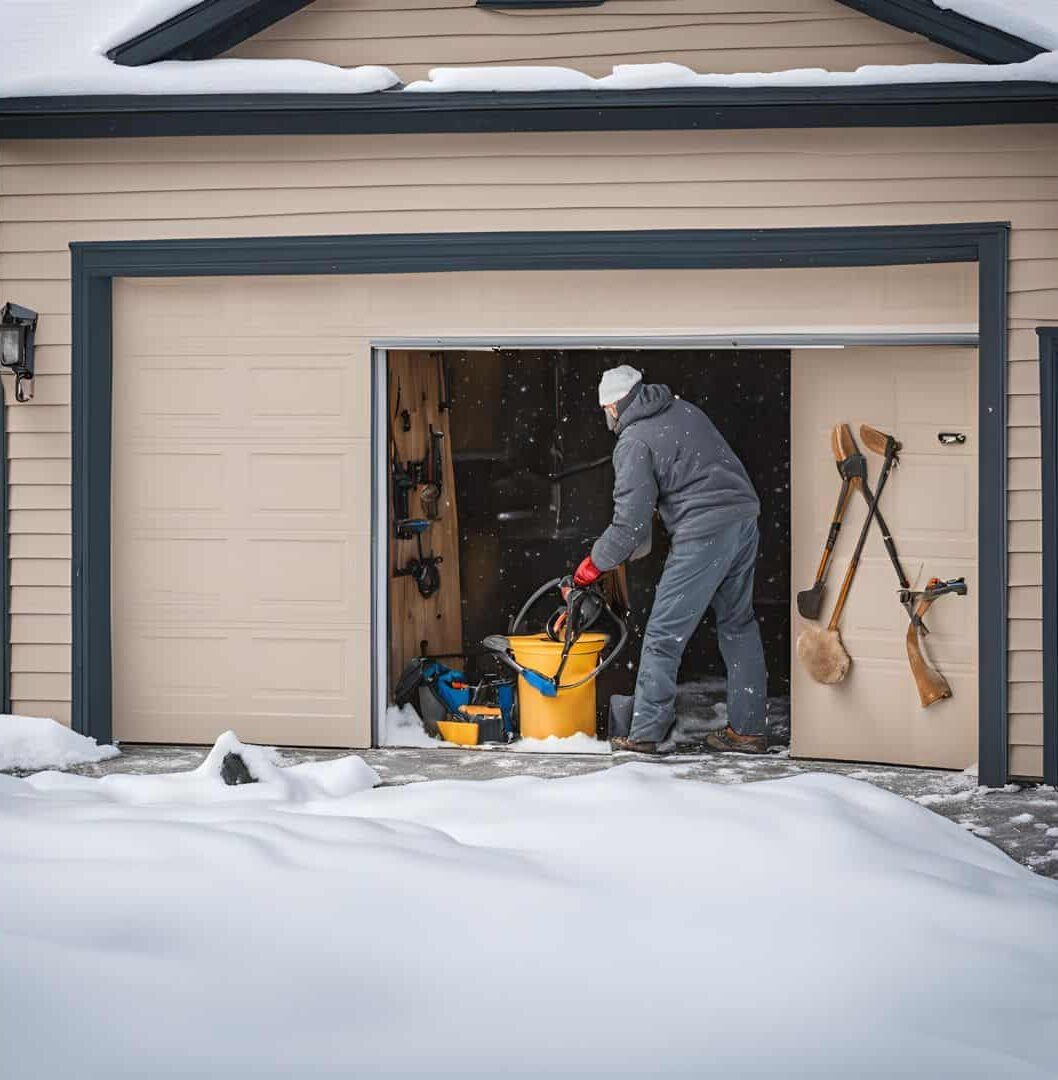
Clear snow from your garage door and driveway regularly to prevent buildup and keep access safe. The Front Range typically sees its heaviest snowfall in March, not at the start of winter.
Keep your snow removal routine going well past the holidays. Don’t assume the worst is over by New Year’s.
How to Organize Your Garage for Winter
Winter Essentials: Mats, Covers, and Coats
Durable floor mats protect your garage floor from salt, slush, and moisture. A garage door cover can reduce heat loss on especially cold nights.
Keep warm coats accessible so it’s easier to work in the space comfortably. If you keep a refrigerator or freezer in the garage, check that it’s rated for freezing ambient temperatures, since some aren’t.
Seasonal Storage Tips for Winter
Store tools and equipment off the ground and protected from cold and moisture. Covers, bins, or shelving all work well for this.
If you bring lawn equipment or patio furniture in for the winter, this is a good time to organize the space. Everything should have a place instead of piling up in front of the door.
Winterizing Tools and Equipment
Drain fuel from small engines you won’t use over the winter. Store anything temperature-sensitive, like paint or certain adhesives, somewhere that won’t freeze.
More Garage Winter Preparation Tips
- Inspect your plumbing. Repair leaks now to prevent frozen pipes and water damage later.
- Disconnect hoses and sprinkler systems. Leaving them connected risks freezing and bursting.
- Insulate exposed water pipes. Pipe insulation is inexpensive and prevents a much costlier repair.
- Check your carbon monoxide detector batteries. This matters more once garages get sealed up tight for winter and heaters or vehicles run inside them.
Get a Winter-Ready Garage Door at Front Range Raynor
A checklist gets you most of the way there, but the freeze-thaw cycle finds whatever you missed. If your opener is already straining or your weatherstripping is already torn, the steps above won’t undo that damage on their own.
What Should You Do Next?
If any of this sounds familiar, here are three steps you can take right now:
- Stop ignoring the warning signs. A straining opener or a door that feels heavier than usual isn’t normal wear. It’s the freeze-thaw cycle telling you something needs attention now.
- Get the parts checked that you shouldn’t touch yourself. Spring tension and opener force settings carry real risk, and guessing at them can turn a small problem into a bigger one.
- Work with a team that knows Front Range winters. Schedule a winter inspection and repair with Front Range Raynor before the next hard freeze finds the weak point for you.