7 Signs Colorado Weather Is Wrecking Your Garage Door

Key Takeaways
1. Weather wears a garage door down gradually instead of breaking it in one event.
2. Most weather symptoms trace back to the seals, the springs, or the opener’s force settings.
3. Front Range Raynor’s factory-trained technicians handle the weather-related repairs homeowners should not attempt themselves.
How Does Weather Affect Garage Doors?
Weather affects garage doors by changing the size, flexibility, and friction of parts that must move together. Metal expands and contracts, rubber hardens, lubricant thickens, and water finds gaps that were sealed a season ago.
Colorado puts a door through all of that in the same week, and sometimes in the same afternoon.
Most homeowners notice the result long before the cause. Matching the two tells you whether you have a five-minute fix or a call to make.
| Weather Condition | What It Does to the Door | What You Notice |
|---|---|---|
| Rapid temperature swing | Sections, tracks, and hardware expand and contract at different rates | Popping or banging sounds, a door that binds partway through travel |
| Sustained cold | Lubricant thickens and steel becomes less forgiving | The door feels heavier, the opener strains or reverses |
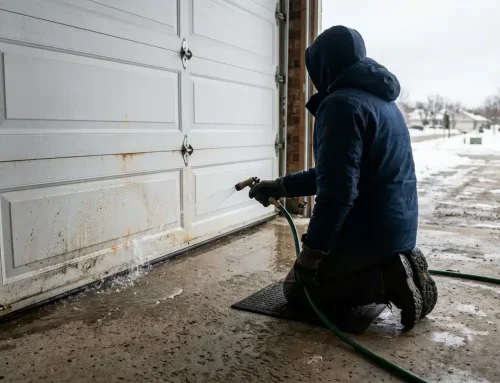
| Freeze and thaw | Meltwater refreezes under the bottom seal | The door will not release from the slab, or the seal tears |
| Strong sun at elevation | Vinyl and rubber dry out and lose flexibility | Cracked seals, daylight at the bottom corners, faded finish |
| High wind | Panels flex and hardware loosens | Rattling, track misalignment, bowed sections |
| Wind-driven rain or snowmelt | Water pools at the lowest point of the opening | Water lines inside the garage, debris at the threshold |
Why Colorado Weather Is Harder on Garage Doors Than Most Climates
A garage door in a steadier climate settles into one condition and stays there. On the Front Range, it never gets the chance.
Fast Temperature Swings Stress Garage Door Hardware
The Colorado Climate Center notes that downslope winds off the mountains can produce temperature rises of 25 to 35 degrees Fahrenheit in a short time. That is not a seasonal change. That is a change your door absorbs between breakfast and lunch.
Steel sections, aluminum tracks, and springs all expand and contract, but not at identical rates. Fast swings put those parts out of agreement with each other, which is where popping sounds and mid-travel binding come from.
Repeated Freeze and Thaw Cycles Wear Out Door Seals
A climate that freezes in November and stays frozen is easier on seals than one that freezes and thaws dozens of times. Each cycle flexes the rubber, and each gives meltwater another chance to refreeze somewhere it does not belong.
That is why a bottom seal here often ages faster than the manufacturer’s estimate suggests. It is being asked to flex far more often than average.
High-Elevation Sun Breaks Down Garage Door Weather Seals
At Front Range elevations, the atmosphere filters less ultraviolet radiation than at sea level, so a cold February day with full sun still delivers a real UV dose to the west-facing side of your door.
UV is what breaks down vinyl and rubber. That is why seals crack on doors that have never seen extreme heat.
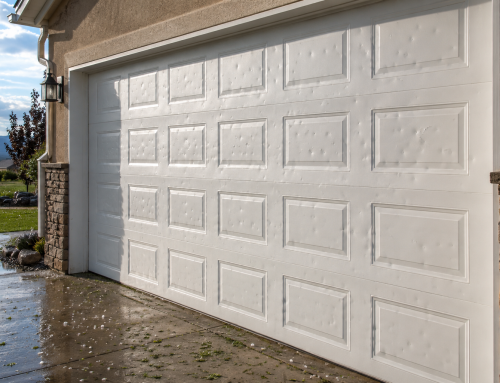
Downslope Winds Damage Garage Doors Without a Storm
The National Weather Service Boulder office lists Fort Collins among the Front Range communities where winds of 60 to near 100 mph occur in and near the foothills. Those events lack the visual cues that homeowners associate with severe weather.
Wind loads flex the panels and work the hardware loose over time. Our guide to hail damage and wind protection covers the structural side.
What Cold Weather Does to a Garage Door
Cold weather rarely breaks parts outright. It exposes the ones that were already worn.
A door that worked fine in October can groan, hesitate, and reverse in January. Nothing broke overnight. The wear was already there, and the first hard freeze made it visible.
- Lubricant. Standard grease thickens as temperatures drop, adding drag to rollers and hinges. A silicone-based lubricant holds up better through repeated freeze-thaw cycles.
- Springs. Torsion springs carry the heaviest load on the door, and cold steel is less tolerant of an existing flaw. A spring that was going to fail this year tends to fail on a cold morning.
- Opener force settings. Openers are calibrated to a set resistance, so when cold adds drag, the opener reads it as an obstruction and reverses.
- Weather seals. Cold rubber compresses less, so a seal that worked in September can leave a visible gap in January.
If your opener strains or reverses more than usual during a cold snap, treat it as a signal rather than a quirk. The time to catch it is before the first hard freeze, and our winter garage preparation guide has the full checklist.
Cold also drains remote batteries faster, a common reason a door stops responding with nothing mechanical wrong. Our post on opener remote problems explains how to tell the difference.
What Heat and Strong Sun Do to a Garage Door
Heat works more slowly than cold, which is why it gets missed. The damage accumulates over seasons rather than announcing itself in a week.
- Seal degradation. UV and heat make vinyl and rubber brittle, and the corners split first. That is where pests and blowing debris get in.
- Panel expansion. Sections expand in high heat, which tightens clearances and can make a door drag on the hottest afternoons.
- Garage temperature. An uninsulated door turns a closed garage into a heat trap, shortening the life of whatever is stored inside.
If summer heat is the bigger problem at your house, our guide to keeping a garage cool in the summer covers ventilation and insulation in depth.
How to Protect Your Garage Door From Extreme Weather
How Does Weather Wear Out a Garage Door Weather Seal?
Weather wears out a garage door weather seal by cycling it between extremes until the material can no longer compress and rebound. Rubber and vinyl are elastic when new, and every freeze, thaw, and UV hour takes some of that elasticity away.
Most doors rely on three seals working together, and each one fails differently.
| Seal | What It Blocks | Weather Failure Sign |
|---|---|---|
| Bottom seal | Drafts, water, pests, and blowing debris at the floor | Daylight along the bottom, a flattened or split profile |
| Perimeter seal (sides and top) | Air and moisture at the door frame | Curling at the corners, drafts along the jamb |
| Threshold seal | Water pushed toward the door by driveway slope or wind | Standing water at the opening, water lines inside |
A gap does not always mean the seal is the problem. A door closing out of square compresses one side hard and leaves the other floating, and a new seal fails the same way if the alignment is not corrected first.
Sealing movable joints remains one of the better returns available to a homeowner. The U.S. Department of Energy estimates that reducing drafts can cut home energy use by 5 to 30 percent per year. Our garage door seal replacement guide covers profiles and fit, and insulating the door reduces how much the panels move in the first place.
Which Garage Door Weather Problems Should You Fix Yourself?
You can safely handle anything that does not involve stored tension, which covers most seasonal maintenance. Cleaning tracks, clearing ice, swapping a bottom seal, and applying silicone lubricant are all reasonable homeowner tasks.
Springs, cables, and opener force settings are a different category. Pat Hunter, chair of the DASMA Commercial and Residential Garage Door Technical Committee, has called the counterbalance system the most complex and dangerous part of a door, because that tension is transmitted invisibly through the components.
DASMA also recommends an annual visit from a trained technician. In a climate that cycles this hard, that visit catches the wear you cannot see. They mentioned on this page to call a professional when you notice:
- A door that feels heavier when lifted manually, which points to spring tension rather than weather
- A popping or banging sound from the spring area, or a visible gap in a spring coil
- Repeated reversing that continues after you clear the tracks and check the photo eyes
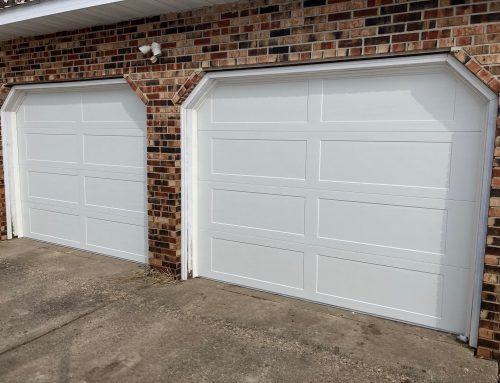
- A door that sits crooked on the floor when closed, which destroys a new seal quickly
- Track misalignment or bowed panels after a high-wind event
If your door shows any of these signs, Front Range Raynor’s certified technicians handle spring, cable, and opener repairs across Northern Colorado, with weekday emergency service for urgent failures.
Get Ahead of Colorado Weather With Front Range Raynor
Front Range Raynor has serviced garage doors in Northern Colorado since 1987, so our technicians have watched these weather patterns work on thousands of doors. That history is the difference between guessing at a symptom and recognizing it.
Every installer completes an in-house training program, and our quoted price includes removal, installation, and taxes with nothing added at the end. If you would rather see options in person, our Fort Collins showroom is the largest fully functional showroom in the region, so you can operate insulated and weather-rated doors before choosing one.
What You Should Do Next
- Match your symptom to a cause. Use the table at the top of this article to sort a seal problem from a tension problem or an opener calibration problem.
- Handle the safe items yourself. Clear the tracks, check the bottom seal for daylight, and switch to a silicone-based lubricant before the next swing.
- Get the rest inspected before the season turns. Schedule a garage door inspection and repair, or request a quote if the door is far enough gone that replacement makes more sense.